Blocked Drain Plumber
in Pinetown
Blocked drain plumber in Pinetown, for the slow basin, the rising toilet and the gully that overflows every time it pours. On a slope, storms wash sand into drains, so the job is to get the silt out and stop it getting in, not to punch a hole through it.
Request a call-outWhat a drain call covers
Everything from the waste pipe under the sink to the point where your drain joins eThekwini's sewer: basins, showers, toilets, the kitchen gully, the inspection chambers along the run and the pipe in between. A toilet that will not clear, or a kitchen drain thick with grease, is as much a part of it as the storm-season trouble this page is mostly about.
Where it suits the blockage, the line is cleared with water jetting rather than a rod, because jetting lifts sand and silt out instead of driving it further down. When a run keeps blocking, a camera goes in to show what is happening inside the pipe before anyone digs.
Usually part of the job
If the restriction turns out to be in the municipal sewer, you will be told and shown why, so it can be reported to eThekwini instead of paid for.
Storm silt is why a cleared drain blocks again
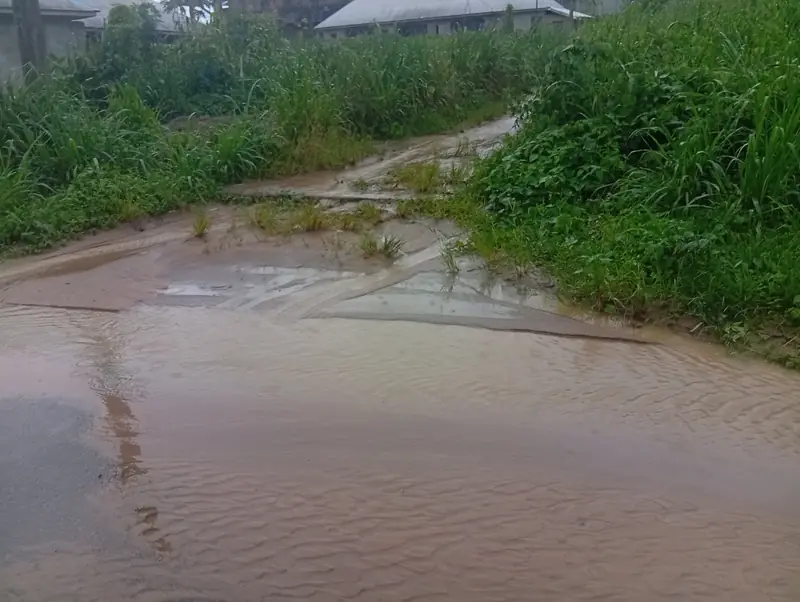
On a sloping plot, a heavy storm can leave sand in your drains the way it leaves sand on the road. A rod pushes a hole through it; the next downpour fills the hole.
eThekwini sees this across its whole network. Reporting on the state of its wastewater system in March 2026, the municipality said the April 2022 flood caused widespread damage to sewer pipelines and manholes, and that sedimentation and siltation in sewer lines, particularly after flood events, have reduced how much they can carry. A pipe partly full of silt is a smaller pipe.
The same thing happens on a smaller scale inside a property. A gully grating set flush with the paving, at the low point of a sloping driveway or garden, turns into an inlet for runoff in a storm, and the runoff brings sand and grit with it. Paolo Candotti of the Mend the Molweni Project has described the same mix reaching municipal pump stations: storm water from illegal connections, often with sand and solid objects in it.
Sand is heavy and drops out wherever water slows down: at a bend, along a flatter stretch, in the channel of an inspection chamber, or at a joint that has settled. Clearing that with a rod opens a channel and leaves the rest where it lies. The drain works until the next big rain, then blocks in the same place, and that is how people end up paying twice for one blockage.
Two sections of eThekwini's Sewage Disposal By-law apply directly. Section 6(5) says storm water may not be allowed into the sewage system at all, so a downpipe or a low gully feeding rain into your drain is both a blockage risk and a by-law problem. Section 19 says that in flood-prone areas the top of every manhole, inspection chamber and gully must sit above the 1 in 50 year flood level. Raising a gully surround above the paving, so that runoff flows past it instead of into it, can be a small job.
The by-law also settles who pays. Your drain meets the municipal system at a connection point about a metre inside your boundary, under section 11(4)(b). Silt on your side of that point is yours to clear; silt in the sewer beyond it is eThekwini's, and belongs in a fault report, not on your invoice.
If a drain blocks after rain, ask for the sand to come out and for the way it got in to be fixed, not just for a hole through the blockage.
How a blocked drain call goes
The order matters most when the drain has blocked before.
Which drains, and since when
One fitting or the whole house? Did it start in the rain? Has it been cleared before? Those three answers usually point to the right end of the pipe.
Chambers opened first
Lifting the inspection chambers shows where water is standing, and so which side of the connection point the blockage sits on, before anything is charged for clearing.
Cleared, with the silt out
Jetting or rodding, depending on what is in the pipe, with sand and debris taken out of the chambers rather than washed on down the line, and the area hosed down afterwards.
How it got in, fixed
A low gully, a downpipe on the sewer, a cracked joint: the cause is named and its fix priced. If the drain has blocked before, a camera look is offered before any digging.
What changes the price of clearing a drain
No figures here, because the same slow basin can be a trap or a collapsed pipe under the driveway. This is what moves the number.
Where the blockage is
A basin trap is a short job. A blockage deep in the run under paving, or in a chamber nobody has opened in years, takes longer.
Whether the chambers can be reached
Covers buried under paving or soil have to be found and lifted first, so knowing where yours are saves time on the day.
Rod, jet or camera
Each step up uses more equipment and time. You are told before it happens, and why it is needed.
How time is counted
Where drain work is charged by time, you hear before anyone starts how part of an hour is billed, so twenty minutes does not arrive as a surprise.
Drain questions
What it costs first, then who pays for which part of the pipe.
What does a blocked drain plumber charge in Pinetown?
The number hangs on two things nobody can see from the street: where in the run the blockage sits, and what it is made of. On the phone you hear how the call-out works. On site, the price for clearing is agreed before the work, and if jetting or a camera turns out to be needed, you hear what it adds and why before it happens.
Who pays when the blockage is outside my property?
eThekwini does, once it is past the connection point, which its by-law places about a metre inside your boundary. To get a sense of which side it is on, lift the last inspection chamber before the boundary. If that chamber stands full, the restriction is further downstream, often at or beyond the connection. If it is empty while the house backs up, the blockage lies between the house and that chamber, on your side.
It was cleared two weeks ago and it is blocked again. Why?
Usually because the cause was left behind. A rod opens a channel through sand, grease or roots and leaves the rest in the pipe, and the next heavy rain or the next big wash closes it again. Ask what was actually removed. If nothing came out, the material that blocked the drain is still inside it.
Can my downpipes run into the drain?
No. eThekwini's Sewage Disposal By-law says storm water may not be allowed to enter the sewage system. Downpipes belong on the stormwater side, such as a surface channel, a soakaway or the street's stormwater system. Taking a downpipe off a gully is seldom a big job, and it keeps a great deal of rain out of the sewer pipe.
What should never be flushed?
Wet wipes, nappies, sanitary products, cotton buds and rags. None of them breaks down the way toilet paper does, and in a drain that already carries storm silt they are what the sand catches on. In the kitchen, keep fat and cooking oil out of the sink: it sets in the pipe as it cools.
Do you clean up after jetting?
Yes. Jetting throws water and whatever was in the pipe, so the chambers are flushed, the debris is bagged and taken away, and the area around the chamber is washed down before we leave. If paving had to come up, putting it back is part of the price.
There is a sewage smell but nothing is blocked. What is it?
Often a dry trap. A floor drain, shower or basin that is rarely used loses the water seal in its trap, and sewer air comes up through it; running the tap for a few seconds refills it. A smell outside near the chambers can mean a cracked or badly seated cover. A smell at a stream or river may be a municipal sewer spilling, which is one to report to eThekwini.
How do I report a municipal sewer problem?
Through eThekwini Water Services on 080 13 13 013 or the toll-free 080 311 1111, by WhatsApp on 073 148 3477, or on the municipality's website or app. Report it once, write down the reference number, and quote it every time you follow up.
Related work on the same pipes
Tell us about the drain
Which fittings are slow, whether it started in the rain, and whether it has been cleared before. We phone back with a few questions and explain the call-out charge.
Where we come out to
There is no shop or yard to visit: The Pinetown Plumbers comes to you. If your suburb is missing from the list, ask anyway.
- Pinetown CBD
- New Germany
- Westmead
- Cowies Hill
- Sarnia
- Ashley
- Caversham
- Padfield Park
- Hatton Estate
- Paradise Valley
- Mosley Park
- Farningham Ridge
- Mariannhill
- Kloof
- Westville
- Hillcrest
- Queensburgh